Building copywriting agents for QuickBooks industry landing pages and FAQs
Content Strategy | Prompt Engineering | Generative Engine Optimization
How I used Claude to systematize GEO copywriting, then package it into reusable agents
Since mid-2026 I've been the sole Content Designer supporting QuickBooks Canada, which means every customer-facing word on the Canadian site: web content strategy, a continuous SEO-driven content pipeline, and in-product marketing copy.
I needed to scale my output to meet the SEO team's demands without dropping my web content strategy work, and without letting quality, voice, or accuracy slip. The answer was a system that scaled with me, and ultimately a pair of GEO copywriting agents that carry my standards, so I can put my judgment where it matters instead of re-deriving format and rules on every page.
To start, the biggest red flag I confronted with AI generating product marketing copy is it confidently describing a feature that doesn't work the way you assumed. Intuit ships different SKUs in different countries, which makes the failure mode specific: a US product page will supply perfectly fluent language for a Canadian product that doesn't have the feature.
So I built the check into the workflow. Before any feature claim went into copy, I prompted Claude to pull the live Canadian product page and write from what it said, then flag anything it couldn't confirm. Unresolved claims went onto a numbered "claims to validate" list attached to each deck, which turned the handoff to product and legal into a set of specific questions instead of a full-page read.
Packaging the workflow as an agent
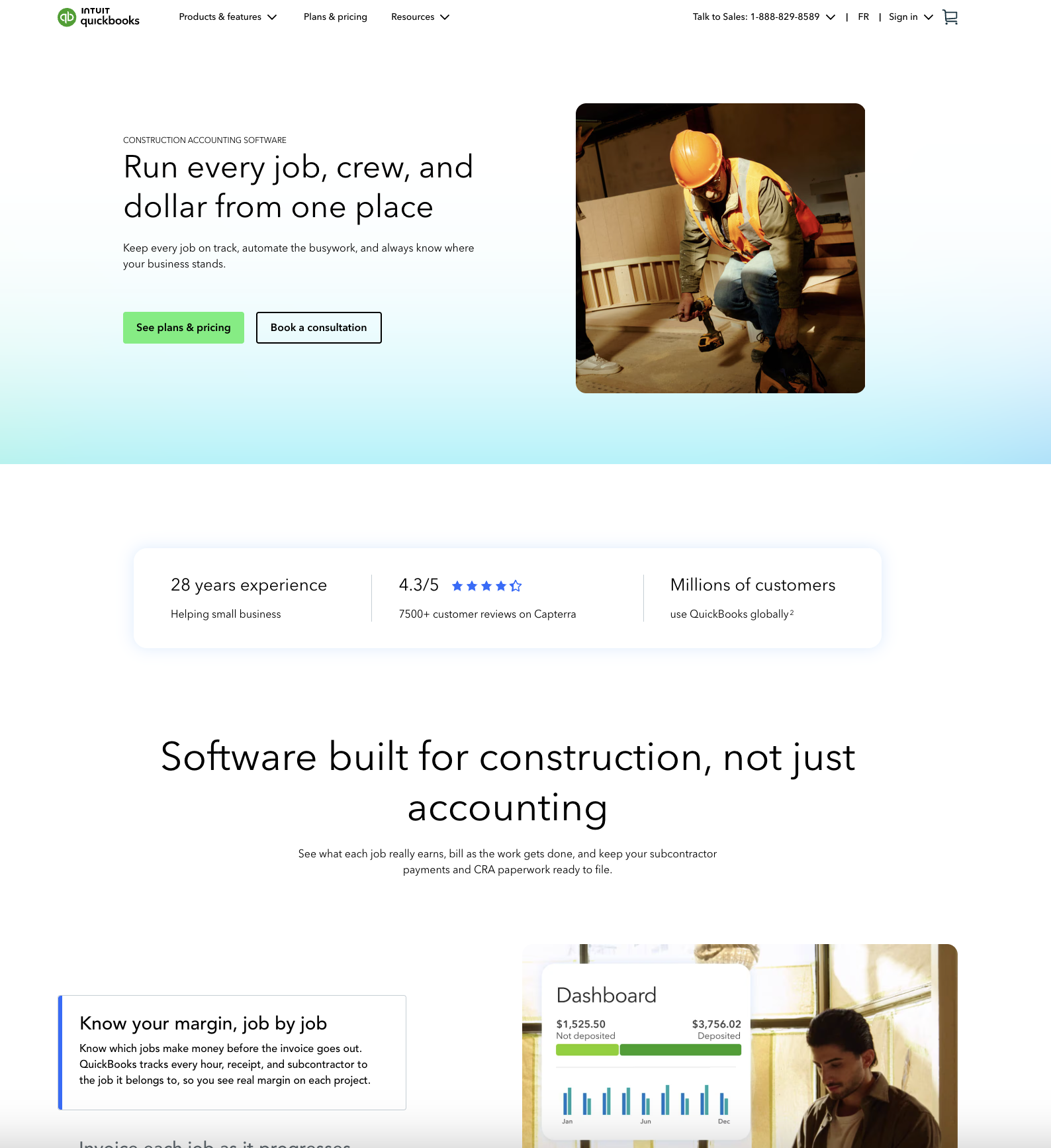
For our industry landing pages, I worked with my visual design partner to develop a reusable page template, section by section: a hero built on the sector-defining concept, a reasons-to-believe row, four workflow beats, mobile app, integrations, pricing, and an FAQ that mirrored the page.
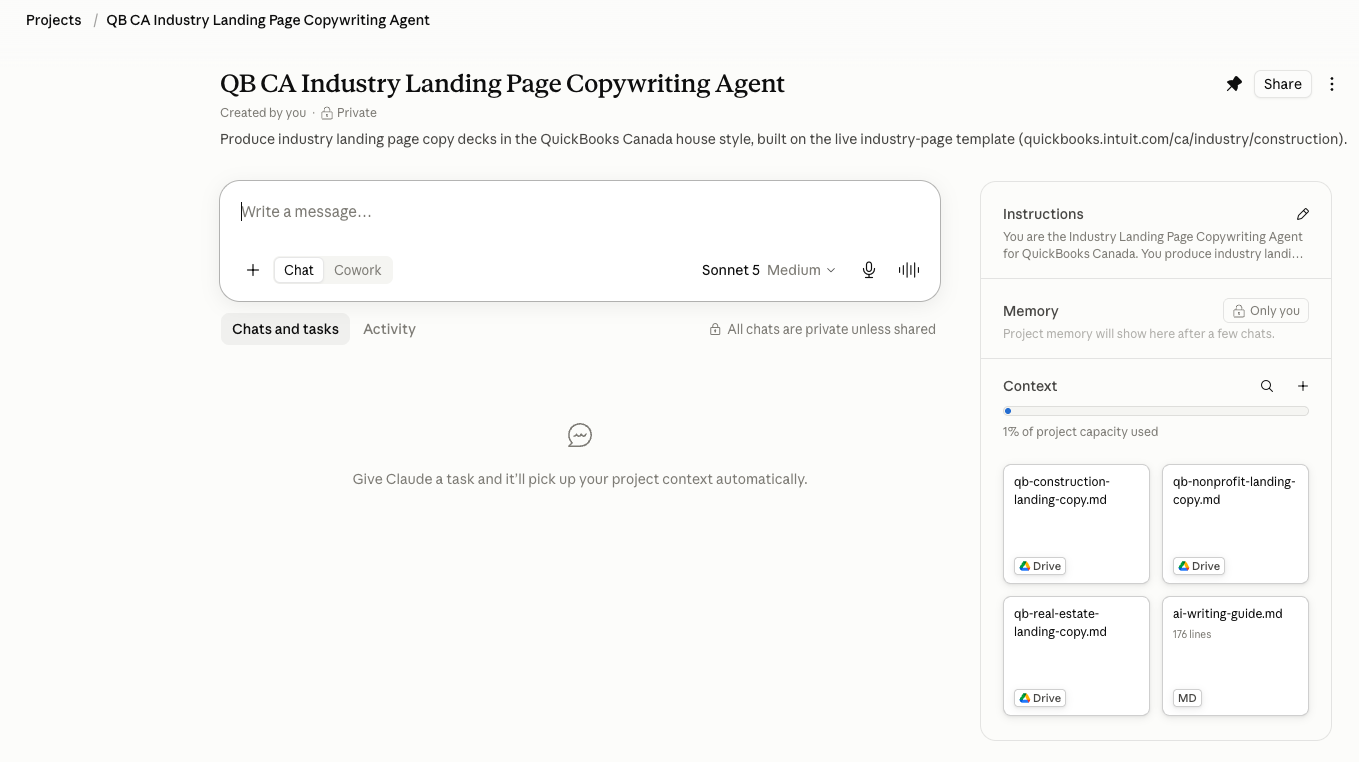
After three decks the pattern was stable enough to codify, so I built the workflow into a Claude Project. The standing instructions hold the operating rules: page structure, voice, beat strategy, verification discipline, guardrails. The finished decks sit in the project as reference knowledge. Instead of hand-filling a brief, the agent collects one in conversation, confirms the strategic calls before drafting, then writes in house style.
Those rules and reference decks are on for every chat in the workspace, so a teammate can produce the same structured, fact-checked draft without first absorbing three weeks of my decisions. Copy deck generation now takes about two hours, first draft to design-ready.
Extending it to the FAQ library
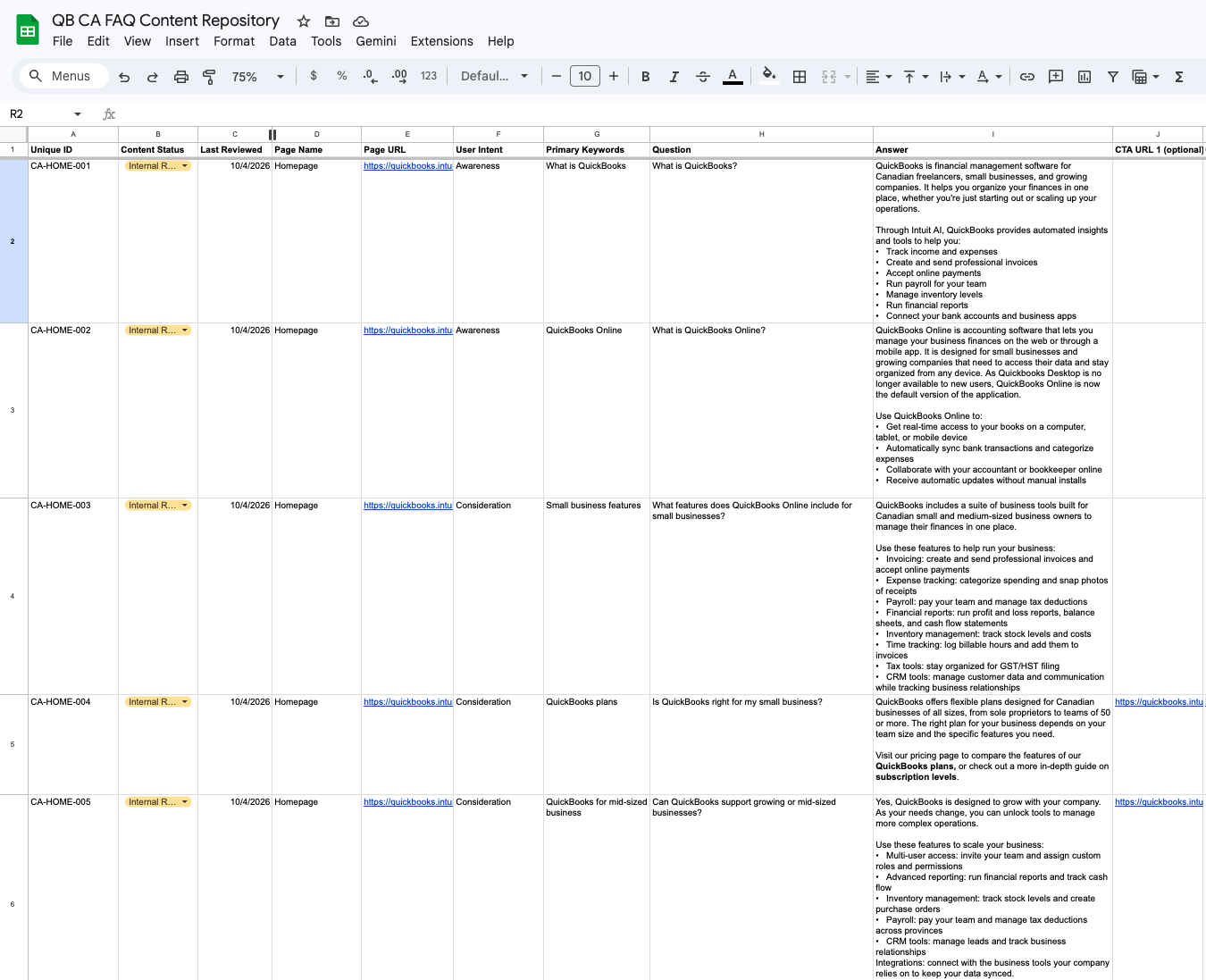
I applied the same approach to the Canadian FAQ library, the other place QuickBooks has to show up for the way people and answer engines actually ask questions. It needed the same three things:
A repeatable structure, with each answer written as a self-contained unit that can be quoted on its own instead of prose that only makes sense in sequence
A reference standard covering Canadian product facts, localized terminology, and house voice
The same verification gate, with every entry mapped to a primary keyword and search intent
Packaged as a second agent, it does for the FAQ library what the first does for pages: take a topic, return fact-checked answers in house voice, and flag anything that needs sign-off.
What stays with me
Judgment doesn't transfer. Which concept anchors a page, how far a brand preference reaches, when a claim is too risky to make even if it can be verified. When a draft names a feature that isn't there or slides off voice, I correct and redirect instead of rewriting around it, because the correction is what improves every draft after it.
The bar hasn't moved either. Whatever produced a draft, and however fast it arrived, it still has to be accurate, on-brand, aligned with the Intuit content design system, and useful to the person reading it. Confirming that before anything ships is my job.